The Old Jewish Quarter in Prague.

We spent all afternoon visiting synagogues and the old Jewish cemetery.  Such a walk turns profoundly moving since the exhibits trace the development of the Jewish communities in Prague from the 12th century to their near-absolute destruction in WWII. Along side the cemetery is Pinskova Synagogue whose inner walls are lined with the names of those were killed or who died in the concentration camps, or on the way there.  It is impossible to make any coherent sense out of the overwhelming number of names that scroll across the walls. 

On the second floor is an exhibit of drawings made by children in the Terezin camp between 1942 and 1944.  My immediate sense was that all children draw alike, and most of the pictures could have been drawn by kids anywhere.  The pictures had names of the children and the years they lived.  To see a panaroma of images, with real names, with birth years in the mid-30s and death years in 1944, was heart-breaking.  It was also a ghastly reminder of the clash of innocence and evil.  

Down the street the Spanish Synagogue has a related exhibit showing how the camp inmates maintained a lively culture in spite of their surroundings.  This exhibit also displayed childrens’ drawings and a few written texts.  One in particular struck me; I could not read the German, but a card displayed the title.
I learned that Miroslav Kosek was born in 1932.  In the camps he wrote a poem, “It All Depends On How You Look At It.”  He died in Auschwitz in 1945.  To imagine a child, in the middle of horror, attaining that simple insight, (which is as meaningful as Williams’s “So Much Depends on a Red Wheel Barrow”) I found heart breaking.
Prague Scenes.

A long day.  Prague disorients and confuses, a condition that I am sure Kafka had to cope with.  Maps can be useless since they can’t capture the tiny shifts in direction the narrow streets often make.  European cities have the disorienting habit of changing the name of a street in the middle of an intersection.  One could, of course, check street signs, but far too often, corners are not named.  Still, this is Prague so I won’t complain more. Now for some quick snaps:

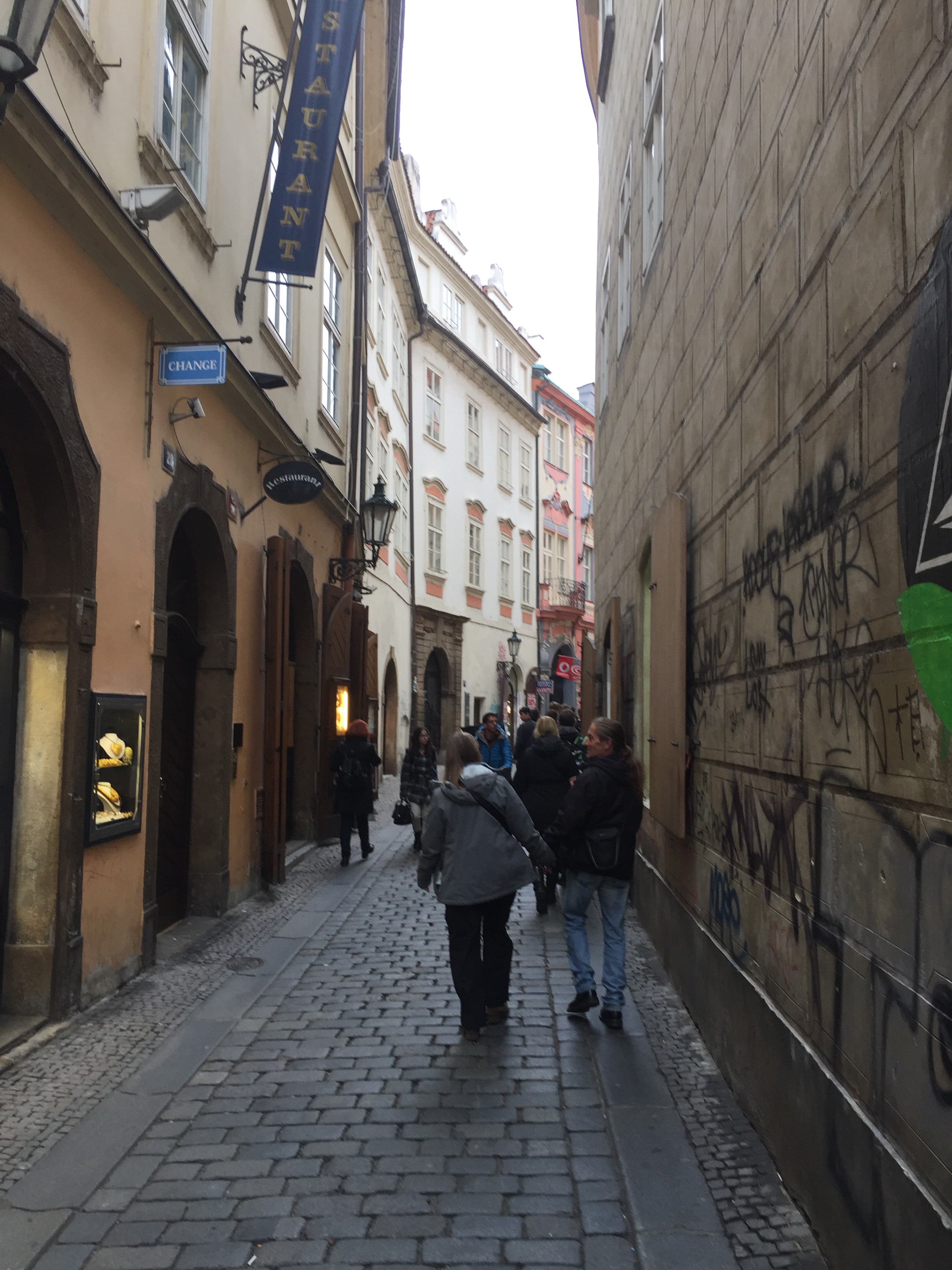
One of those narrow winding streets on which I got lost and simply circled back to my starting point.


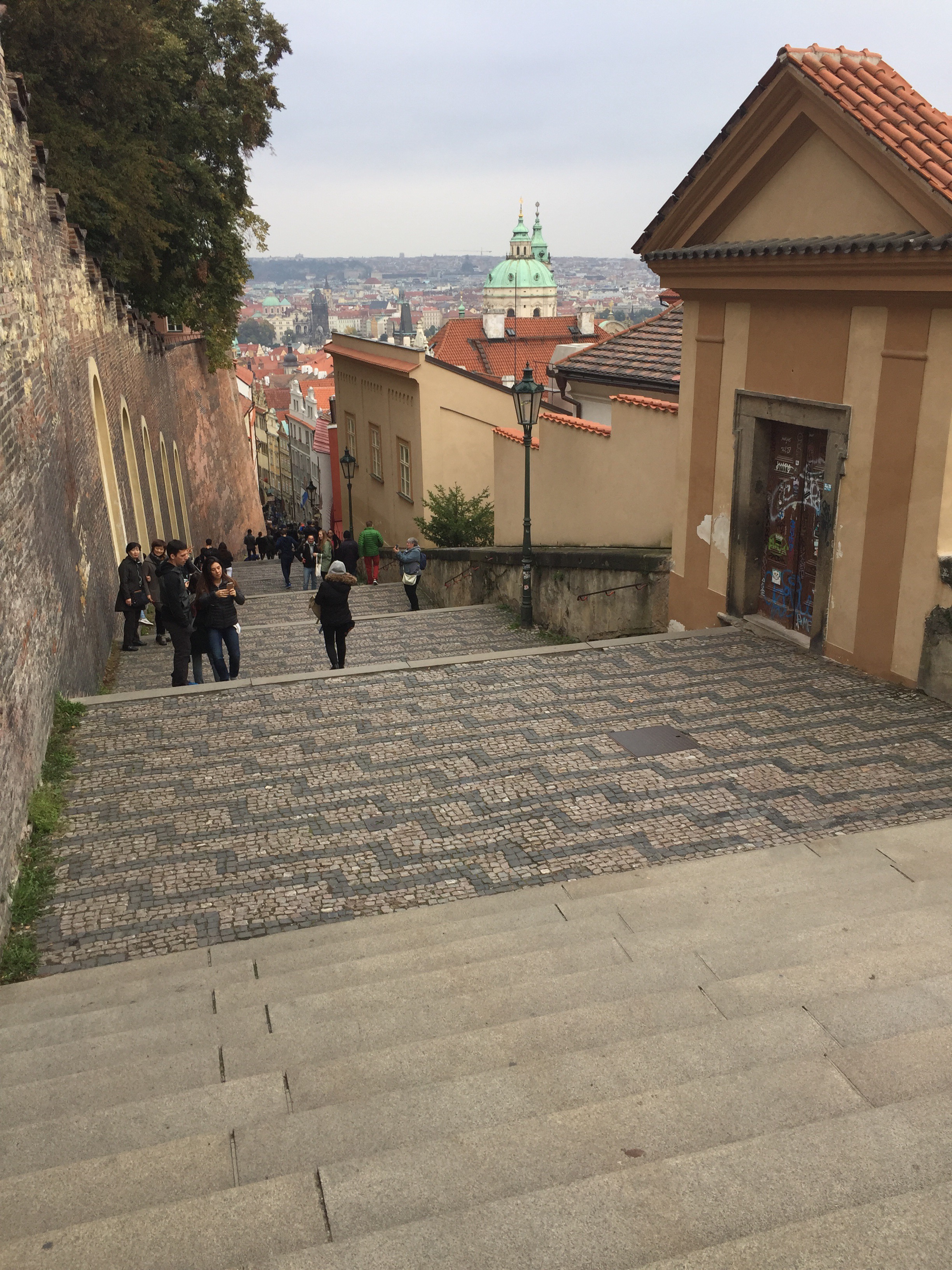
From the Charles Bridge, the major crossing of the Vlatava which wanders through the Czech Republic and joins the Elbe. Swans on the water, lots of them, simply gliding. At the top of the hill is Prague Castle, the seat of the government and the home of the Czech president.  The spires belong to St Vitus Catherdral, no dancing allowed.  At least it is Gothic, not German baroque.

The changing of the guards, not quite as impressive at the event at Windsor Palace, but I’ve never been to Windsor, so this is my sense of how guards change.

The walk up to and down from the castle was steep enough to remind me of Ithaca.


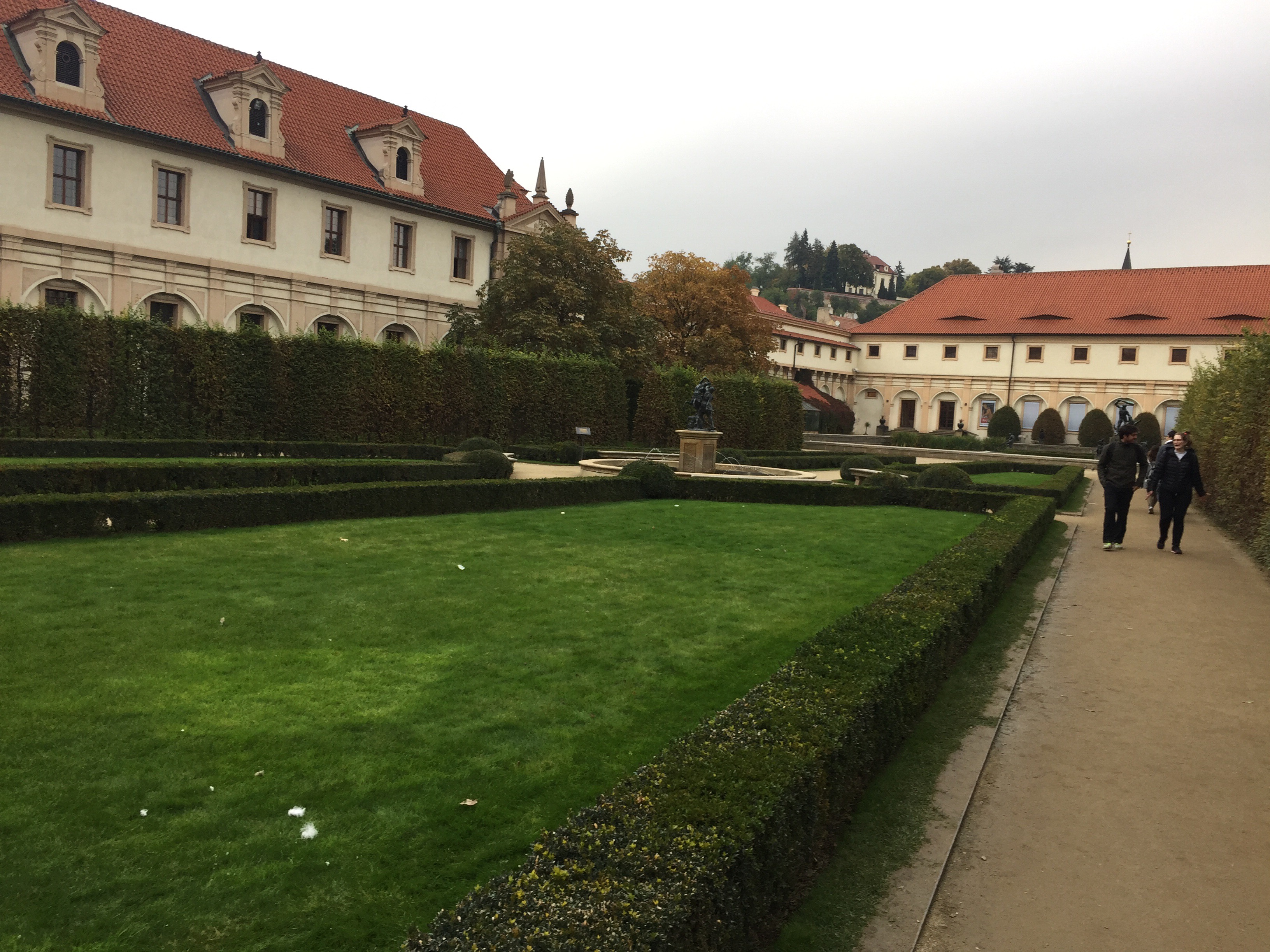
On the way down, bypassing the Charles Bridge which was thronged with strolling visitors, we stumbled into the Waldstein Garden, now the home of the Senate of the Czech Rebublic.  Manicured lawns and hedges.


But also fauna of a decorative sort.  A few rather tame peacocks, mostly drab hens and two more brilliant cocks, wander casually along the paths, seemingly oblivious to human interlopers.  This one seemed to pose deliberately for me on a pedestal. When Nancy saw the swans below the bridge, she thought of Yeats and Coole; I heard the peacocks’ cries as a Yeatsian transition.  We see the world through what we read.


Not quite the Peaceable Kingdom, but these species seem at ease with each other.


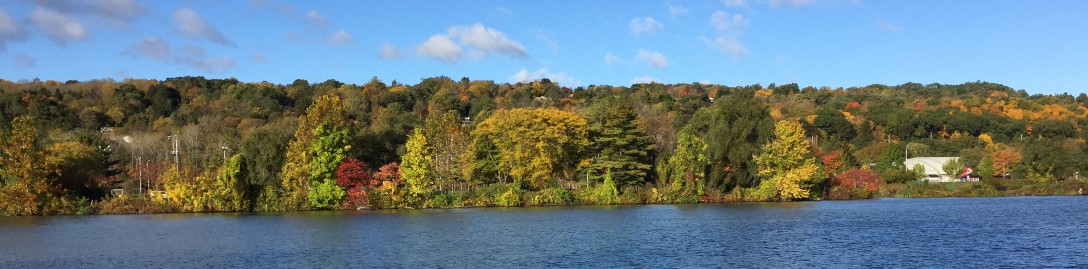
When I left Ithaca, I left a yard in disarray with patches of dried matted grass, stressed from the drought.  Either Prague is not enduring a drought or the Senate can afford to water.


If one took a photograph of every startling structure, one would never walk more than 10 blocks a day.  I especially appreciated how these buildings mirror each other at their intersection.


Along the Elbe to Prague.

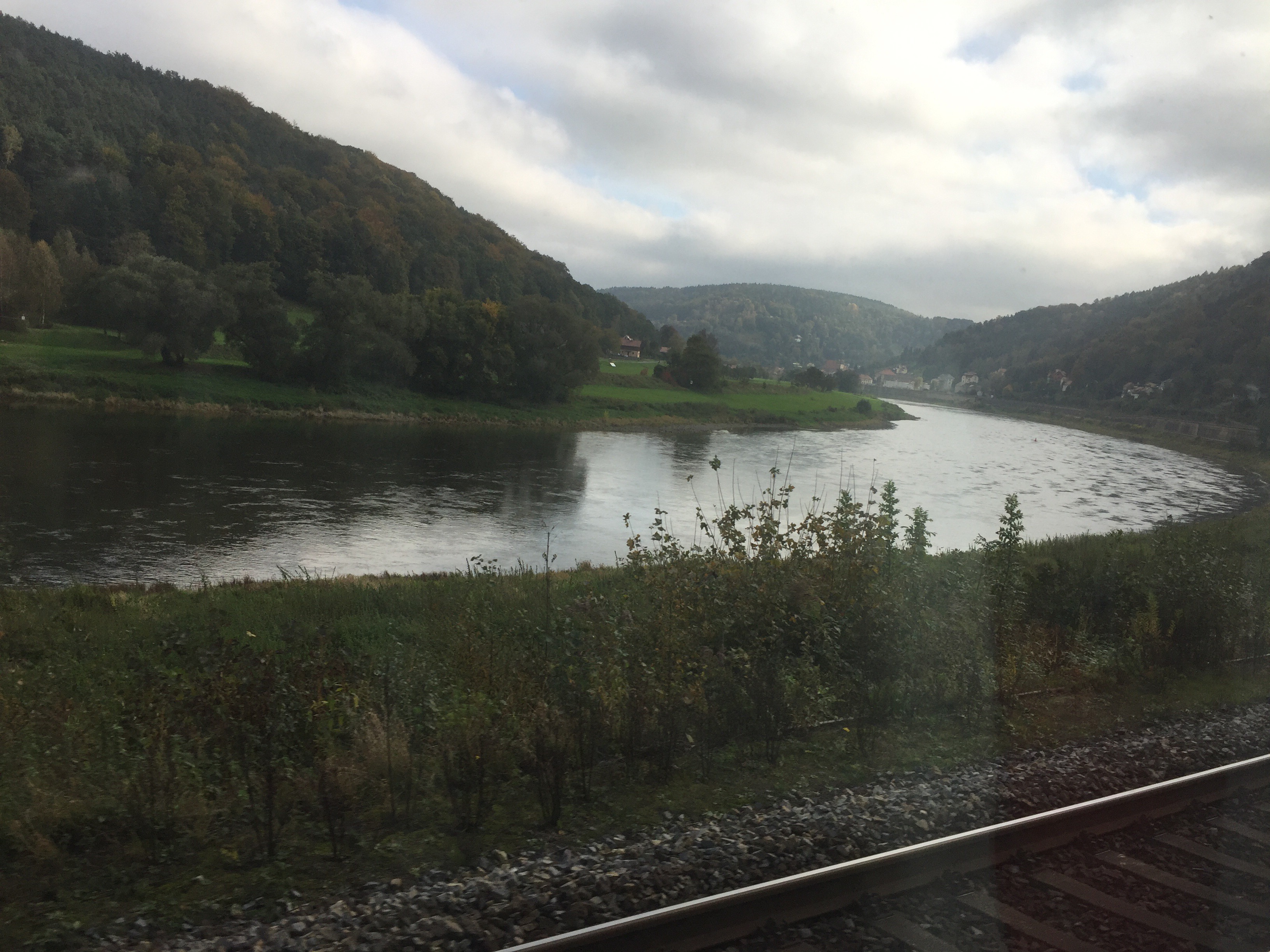
A bit of research just before we left Berlin recommended getting seats on the east side of a train traveling from Dresden to Prague.  We reserved to seat but had no choice on the on the side of the train, which, fortunately, happened to be the right side.  And the recommenders were correct in their advice.  As the train heads south to Prague, the tracks closely follow the Elbe which opens up to some dramatic landscapes.

The Saxons refer to the portion of the Elbe as Saxon Switzerland because of its hilly character.  There’s a section in Normandy which also appropriates the term “Swiss” or “Switzerland” to suggest a mountainous terrain.  In this section of Saxony, one finds rugged hills, which will suffice for anyone leaving a city to be suddenly confronted by abrupt steep hills, cut on occasion by narrow valleys.  (I took a number of photographs from the train window, speeding at 100-120 kph, so there might be some blurring.). This counts for rugged, one of a series of cragged hillsides.  The area must still be early fall since only a hint of yellow and emerges on the edges of the river.


The Elbe originates in the Czech Republic and wanders north through German to empty into the North Sea.  Riding for just a few miles along the river makes clear how it served as a major barrier for thousands of years between the world the Romans created and that of the inexorable barbarian tribes who were held at the river for only a short while.  

Rivers become most dramatic when then bend and turn. 

This stretch of river with its low, wide banks does not look particularly threatening as a barrrier, but for many miles I saw no bridges, so there could not be much connection between the east and west sides.  Every mile or so, on each bank appeared matching docks, with a small boat moored at one.  I suspect that ferrying passengers with bits of freight remains a viable occupation.
We arrived in Prague in gray and gloom, setting off on a easy walk to our hotel.  We arrived an hour and a half later, since the detailed maps I had downloaded were not detailed enough for the twisting and narrow streets of old Prague.  We were misdirected by a clerk in an Information office and by two other locals.  Our hotel is on a narrow alley and few people in the neighborhood seemed to know that it existed.  When we finally discovered it, I realize that early in our back and forth confused wandering, I had seen the extrance to the alley but took it as some kind of driveway.

Settled in late, we took a quick walk into the Old Town Square where we found a level of energy and excitement unlike any I’ve encountered.  At 7:00 o’clock on a Monday evening people were teeming across the cobblestones under that lighted spires of Tyn Church.

All politics, all the time.

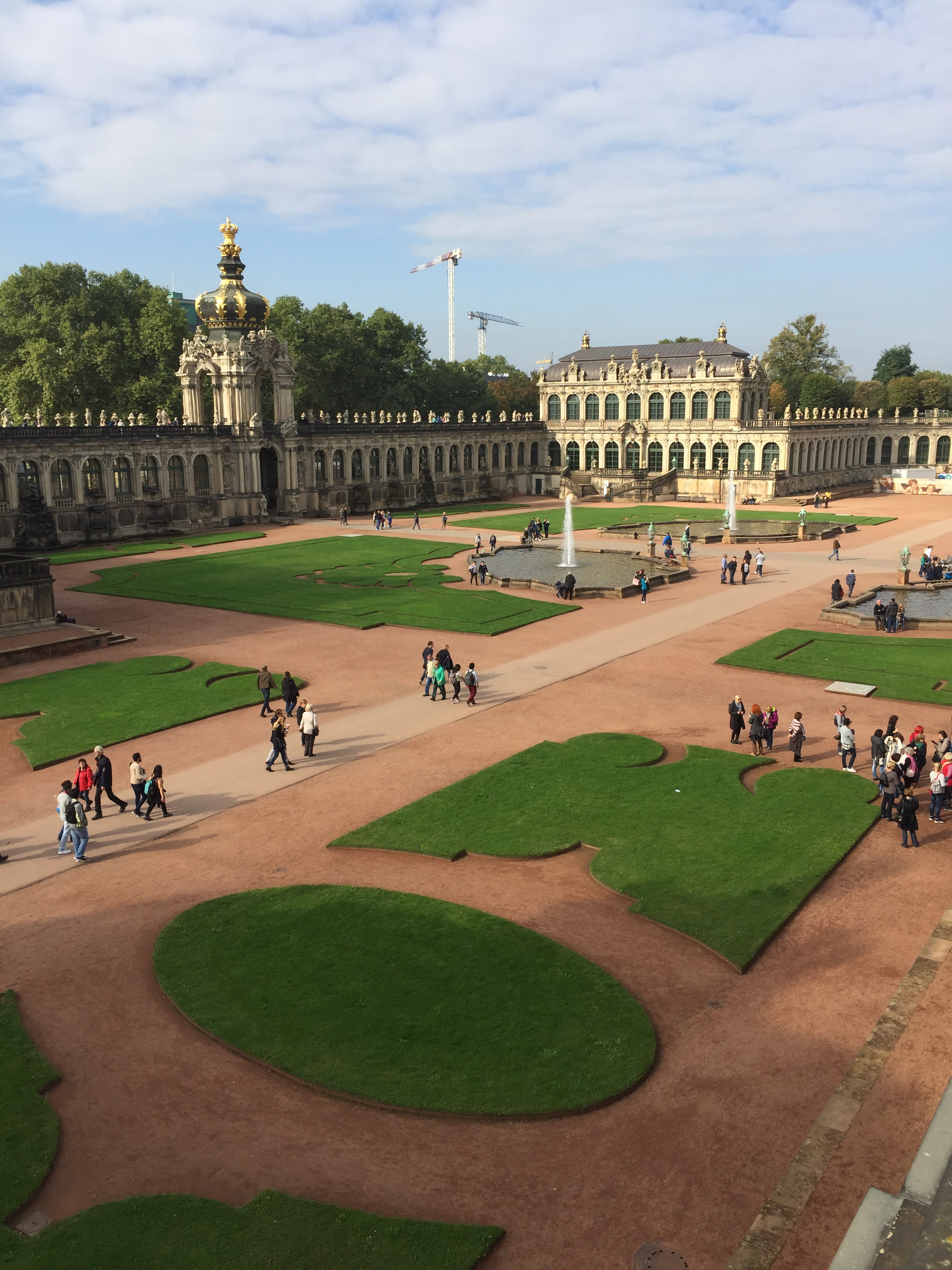
Just before leaving the USA, I had joked that a benefit of being away during most of October was not being subjected to the presidential campaign.  I do check into the news each day, but since I don’t expect to get a current events quiz on my return, I pass through campaign stories quickly.  Sunday, Nancy and I set out for the Zwinger, an 18th century palace in Dresden that now houses museums.  Something about the layout of buildings and grounds struck me as slightly familiar, perhaps a bit like Versailles, on a minor scale.  I soon learned on Frederick Augustus, Augustus the Bold, Elector of Saxon and Emperor of Poland, had toured the capitals of Europe and had been particularly impressed with the early stages of Versailles.  On his return to Dresden, he said “I’ll have one of those.”

His domaine was not nearly as extensive as that of the Louis he visited, so on his return to Dresden, Augustus settled for something a bit more modest.


The Zwinger now houses the Dresden collection of “old masters,” 15th to 18th century.  We chose to start with its collection of porcelain.  Augustus the Bold, besides being a warrior


took a fancy to Chinese and Japanese porcelain and gathered together what is now the most outstanding collection of porcelain artifacts in the world, from the everyday to the purely decorative.  Augustus was also responsible for the development of the Meissen porcelain industry in Saxony.


While browsing the rooms of porcelain, I heard sounds of muffled shouting and chanting, clearly marking a street demonstration.  From the walls of the Zwinger, we could see a large crowd forming in the plaza in front of the Catholic Cathedral.  A cordon of police and well over a hundred police cars had funneled the marchers to the plaza and then stood around watching.  I noted in passing that the German police forces seem to have many more women than the police in the U.S.

As we left the Zwinger and circled around the barriers that kept the crowd contained, we could hear the major speaker of the day haranguing the crowd. And it was a harangue to which the crowd provided enthusiastic support.  The organizers had been thoughtful enough to provide an English translation for the speakers remarks–a few German sentences were immediately followed by an English equivalent.  

Checking the news later, I learned that the rally had been sponsored by the Patriotic Europeans Against the Islamization of the West (PEGIDA).  We didn’t stay to listen, but as we walked by we heard “Merkel must go,” “we must protect our women and children,” and “we can’t let political correctness keep us from speaking out.”  I realized, of course, that the rally we were skirting was relying on the same anger and hostility that Trump has so vividly exploited.  I don’t think he would have been out of place here and the crowd would have cheered him on.  

In traveling, we are not leaving behind what I had hope to avoid.

The Trains Do Run On Time

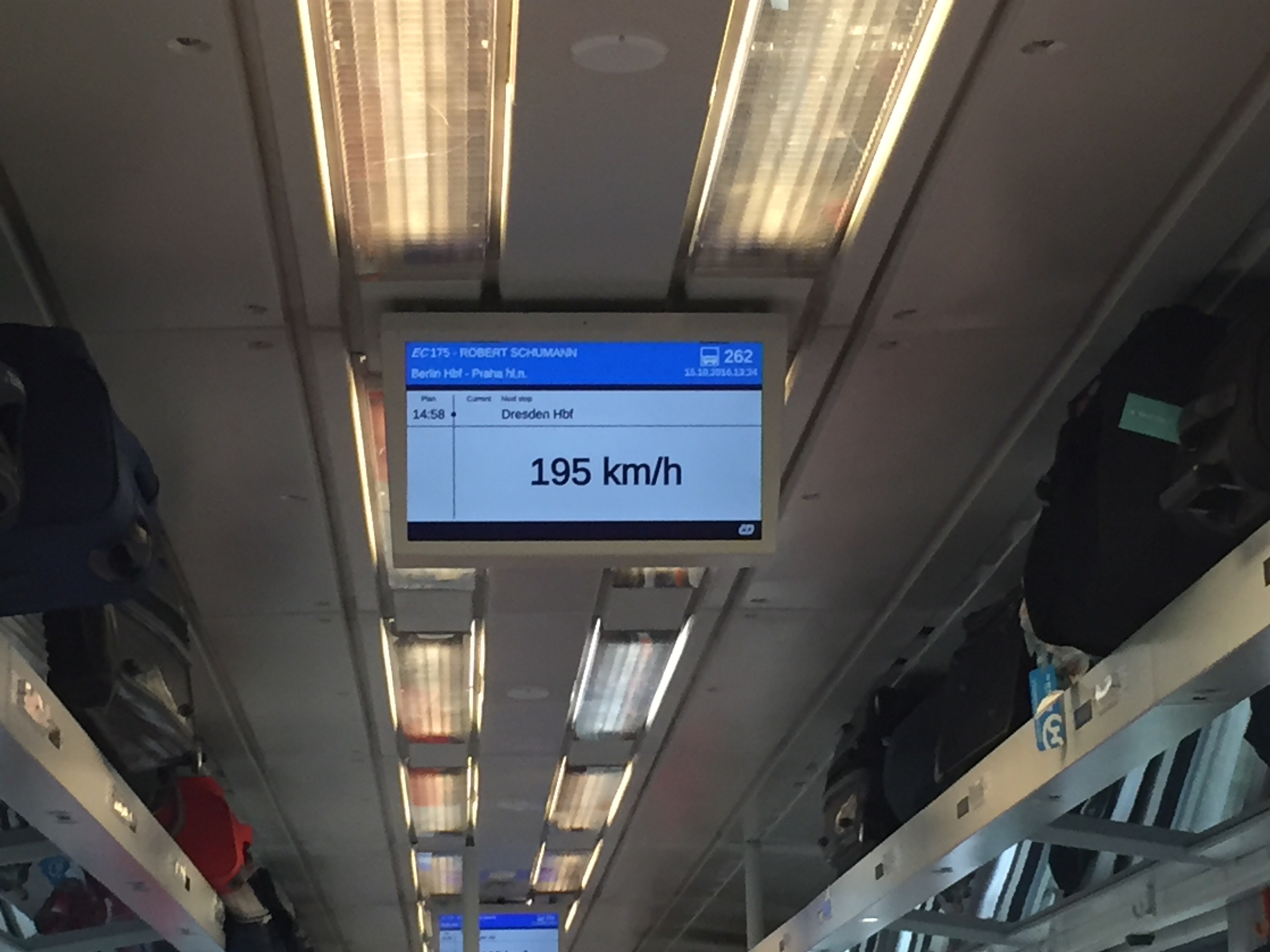
We left Berlin for Prague, with a 2-day layover in Dresden.  The electric train glided out of the Hauptbanhof exactly at 13:05, as the schedule suggested.  I was oddly impressed that the train system is so meticulous that it posts permanent schedules of car numbers, arrivals, and departures.  I’ve ridden Amtrak, and its schedules are at best, approximations with an extensive margin of error; its cars haphazard.  And in contrast to an Amtrak train, the German trains glide smoothly over the rails, with no clacking or swaying.  It covered the 120 mile trip in just under two hours, slowing and stopping occasionally, but mostly keeping up a brisk pace–which was noted every few minutes for those concerned:


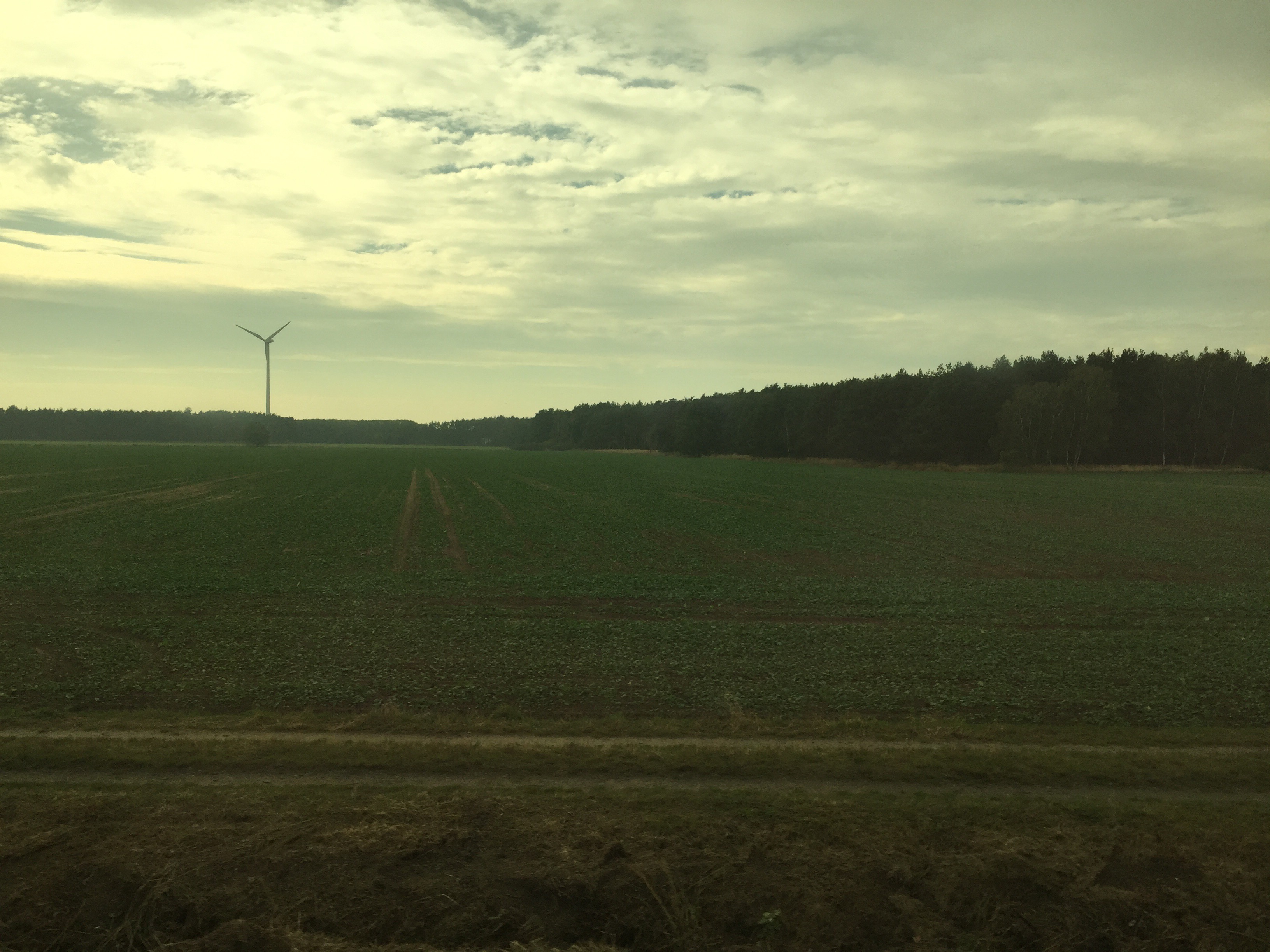
For much of the journey south, the land of quite open and flat, broad fields, bordered often by pine and birch forests and at times wind farms–viewed at one 100 mph.

I suspect many people my age will associate Dresden with Billy Pilgrim in Vonnegaut’s Slaugherhouse Five. The lingering controversy over the Dresden bombing, which destroyed much of a city considered a cultural landmark, simply emphasizes what we’ve become too innured to since the bombings in Vietnam:  supposedly well-planned actions, designed to achieve strategically significant goals, are often poorly executed because the tools at hand lack the expected precision.  Vonnegaut simply gave voice to the horror that many people in German, Japan, and North Vietnam experienced as the lords of air power sent their toys to wreck havoc.  Today, the U.S. can do more with drones and guided bombs that Curtis LeMay could only dream of; yet the execution remains as imperfect as always, and families, schools, hospitals, still get disposed of collaterally

Much of Dresden was destroyed and has been rebuilt into a vibrant city.  Some exquisite reminders of a heroic past did survive and can inspire wonder.  Just outside my hotel room is the Kreuzekirke, a neoclassical church built on a site first established in the thirteenth century.  Unlike the gothic cathedrals of France, it did not retain its original form and this latest version was completed in 1800.  Though set afire in the bombing, it endured and was re-established to a traditional form.


More impressive is the Frauenkirche, a few blocks away.  I find it hard to understand how a culture could build and sustain two such massive churches so close together.   This church was, in fact, destroyed during the bombing and only rebuilt following the re-unification of Germany, so I guesss my greater wonder is at the cultural drive to re-establish such a monument.  I like looking at churches but I don’t think I’d spend too much energy trying to build one.  Both churches were once Catholic and are now Lutheran, and Luther keeps watch.


Not to be outdone, the Catholics had their own monumental church, the Cathedral of the Holy Spirit.  I’ve tried to remember some of the intracies anc confusions of the Holy Roman Empire and the Thirty Years Wars.  I did learn in (Catholic) high school history that in many contested areas, the good guys (the aristocracy) remained Catholic while the lower classes were eager to follow Luther to their damnation.  This catherdral was built by a Polish King who was also the Elector of Saxony to rival to the Lutheran church. I suspect its architect looked to some older gothic models for the flying buttresses and wonder if the  dome at the top reflects a more eastern culture.


Dresden does have water, the ELbe River, flowing between the old city and the new, though those terms are not modern references.  The Neustadt was built across the river in the 18th century.

A walk in the woods

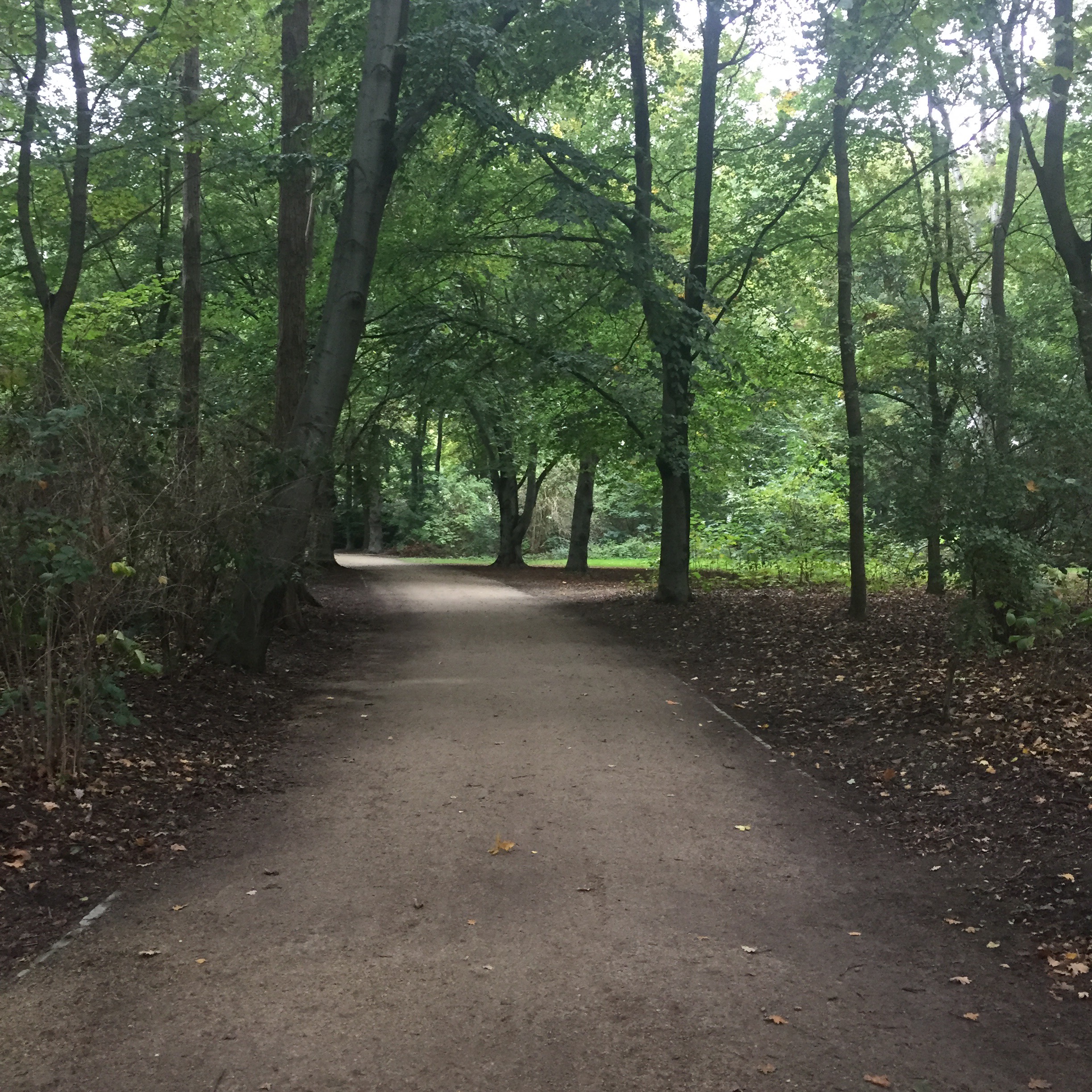
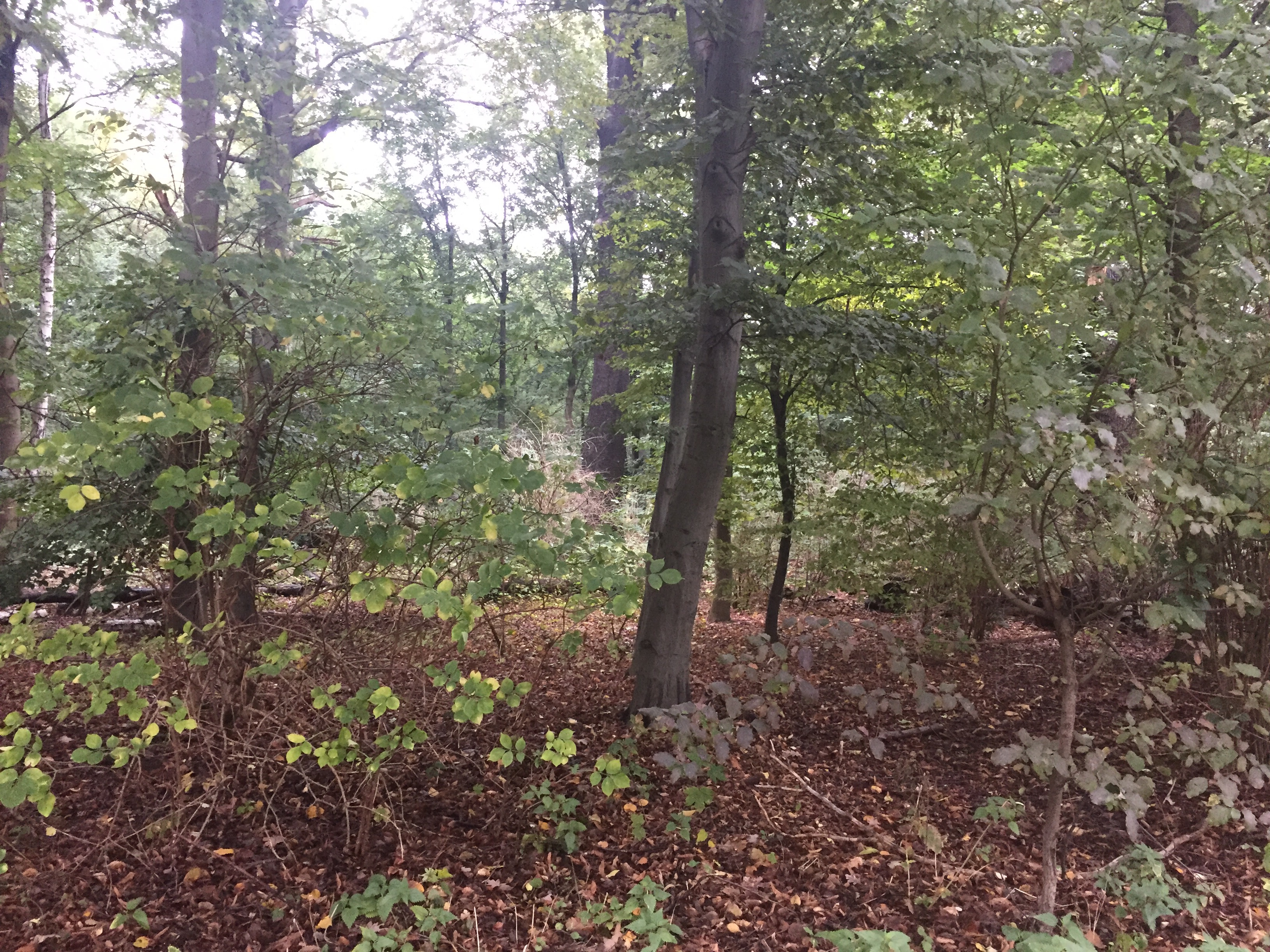
We have managed to get out doors and are not spending all our time on cultural uplift.  We took a walk through the Tiergarten, Berlin’s central park.  Not quite as large as New York’s, it feels much more woods like and dense. 

The park is split by the Strasse des 17 Juni, so named by West Berlin to commemorate an uprising of East Berlin workers against the Soviet backed regime.  The street, really a major highway, begins at the Brandenburg gate, passing by a memorial to Soviet soldiers killed in the fighting over Berlin in 1945.


Wandering from the Tiergarted toward Potsdamer Plaz, I realized that we were in the middle of the Memorial to the Murdered Jews of Europe.  A friend had suggested I visit this site, but the sudden appearance, with no signs announcing it’s purpose, surprised me, since I had expected a more official recognition.  A field of over two thousand stone slabs, of varying heights, arranged in rows that rise and dip. I was reminded of the Vietnam Memorial because of the way the slabs deliberately undercut the more traditional form of a memorial, something that announces its purpose and tries to aggrandize.  This site simply disconcerts, puzzles.  The knee-high slabs suggest sarcophagi and the larger ones, prehistoric markers.  

Across the street, on the fringes of the park, is another monument. Dedicated to the homosexuals murdered by the nazis, it follows the slab motif, presenting just one, imposing block, with a window that displays a simple affectionate embrace of a couple.  Together, both memorials are relentless, and their blankness demands that one imagine and decode.


A few blocks from the memorials, Berlin turns aggressively modern in Potsdamer Plaz with a series of stone and glass buildings whose shapes announce an architectural plan to set a design in space with no attention to the surroundings.


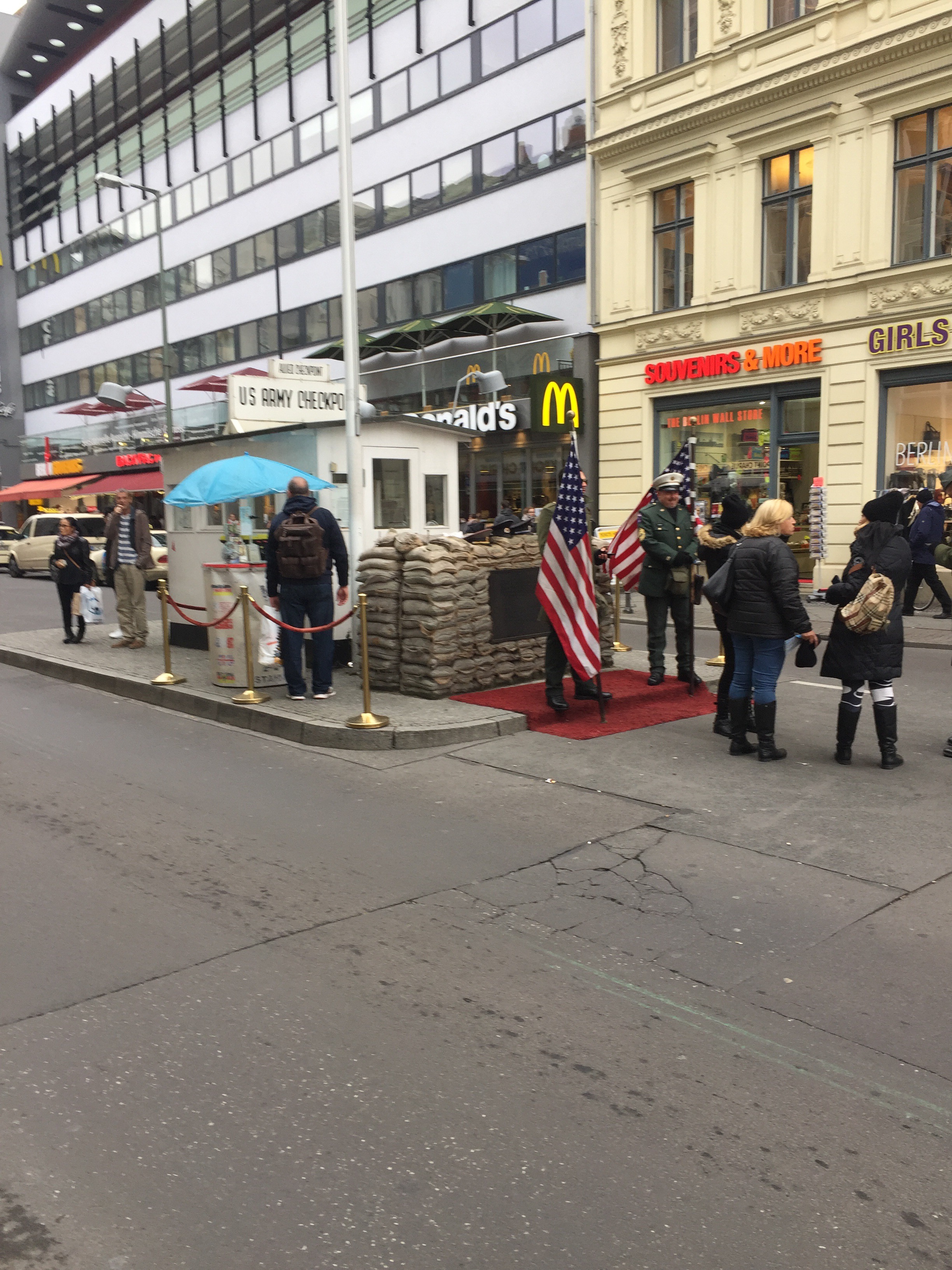
Reading espionage novels from the 1960s, my sense of Berlin was dominated by scenes set at Checkpoint Charlie, where nervous spies, either inept or clever, nervously planned their escapes from the East.  Most of my time has been in the old East Berlin sections, but I did make a detour to the original Checkpoint which is now merely a relic of street theatre with performers dressed as U.S. soldiers ready to pretend they are guarding the gate to freedom. (The area around the checkpoint is the most tawdry one I’ve seen so far.)

Museum time, the rain continues

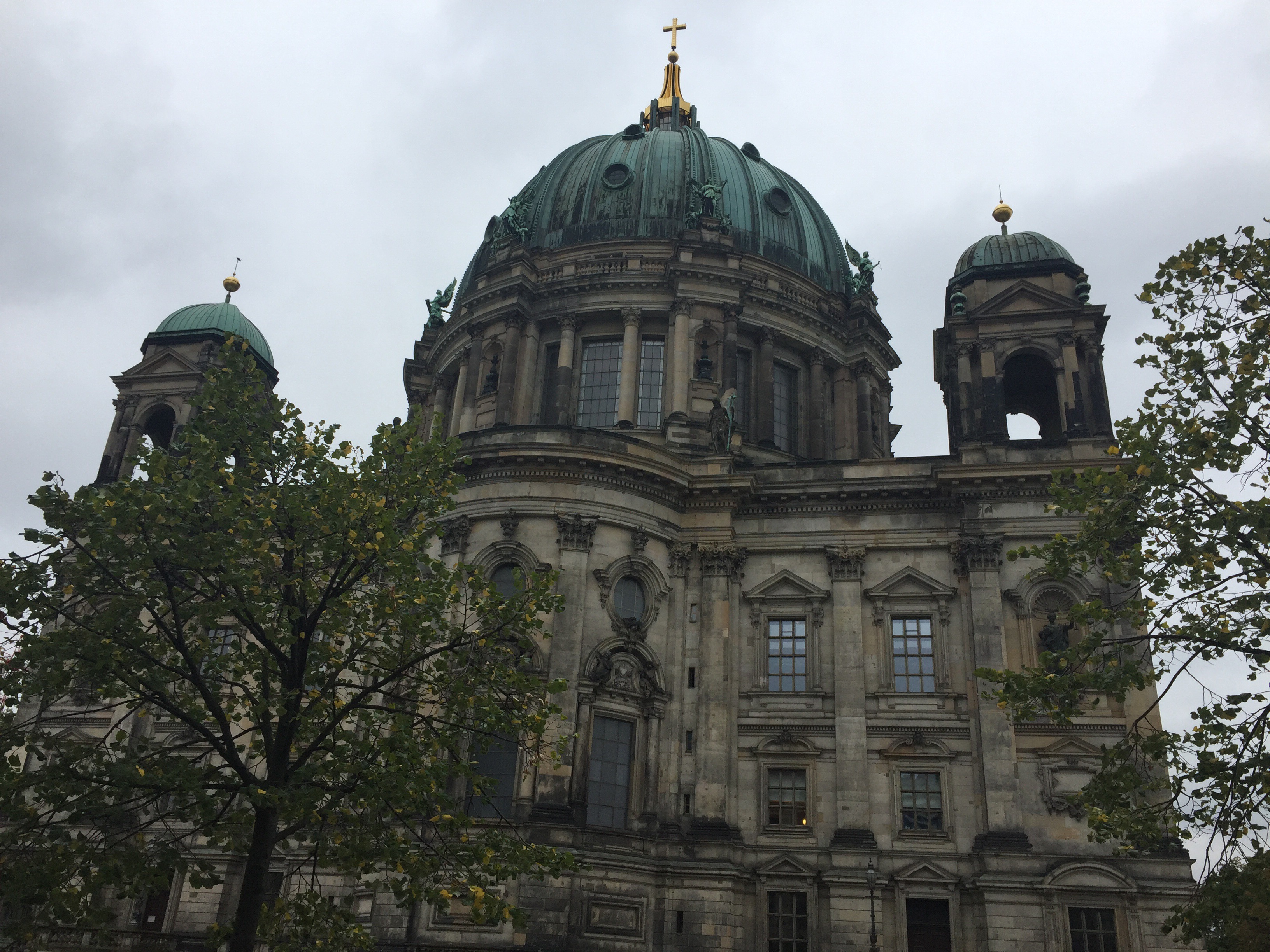
Berliner Don, completed in 1905, lacks, to my eyes, the graceful elegance of Gothic cathedrals.  But maybe that’s just my former Catholic bias.

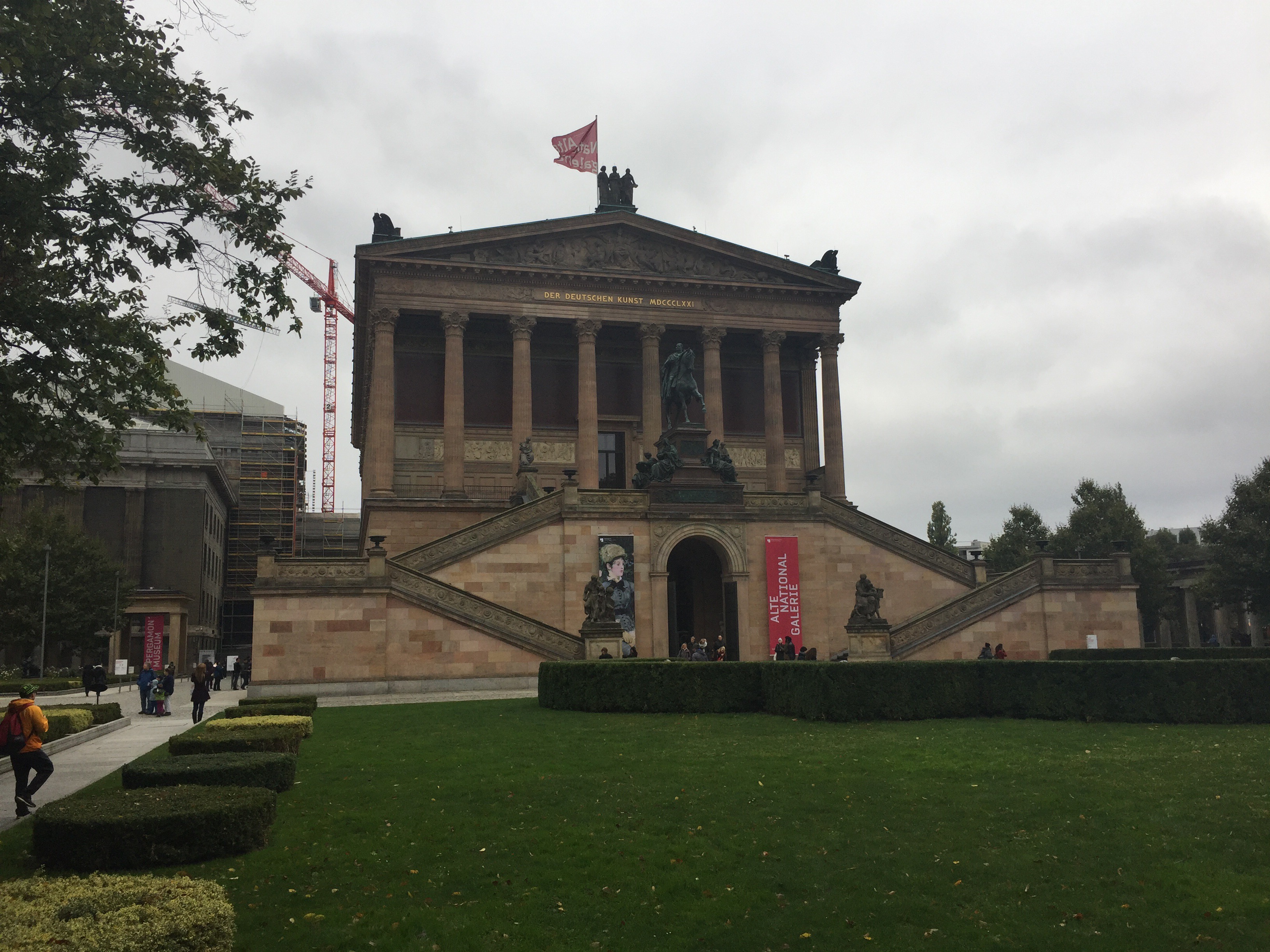
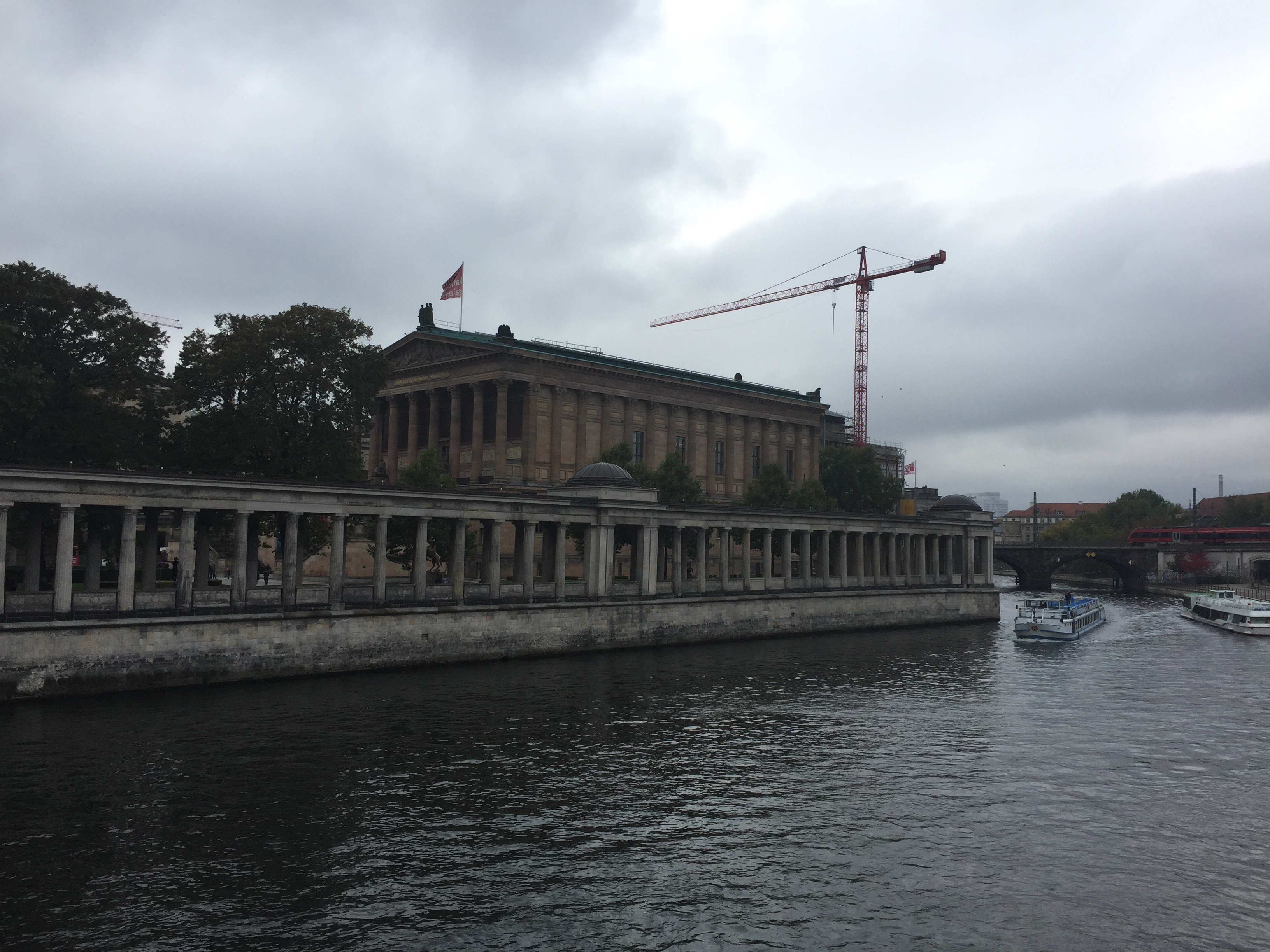
A view from a bridge of the Alte Museum, reflecting the imperial design.  One cannot look at the skyline without noting cranes hovering over construction projects.  Museum Island was in the former East zone of Berlin and many of its buildings needed refurbishing after the ouster of the East German regime.

The Pergamon facade, not a Christo exhibit.  The Pergamon, nearby, has been under reconstruction for years and is not slated for reopening in for several more.


The Alte Museum close up.

Right next to the Alte Museum is the Neues Museum features an outstanding collection of Egyptian and classical antiquities as well as artifacts collected by collected by Heinrich Schliemann, the excavator of Troy. I read once that Kaiser Wilhelm, wanting to out-do the British in every arena, not just in navy size, emphasized the collection of Egyptian and Aegean objects, trying, no doubt, to go one better than the Elgin Marbles. So with usual efficiency, his scholars helped developed the field of ancient and classical archeology, collecting specimens with a rigor that probably bordered on ruthlessness.

The museum name clearly suggests “new,” obviously not referring to its collections. The museum was built after and next to the Altes (old) Museum, for the Prussian royal collection.

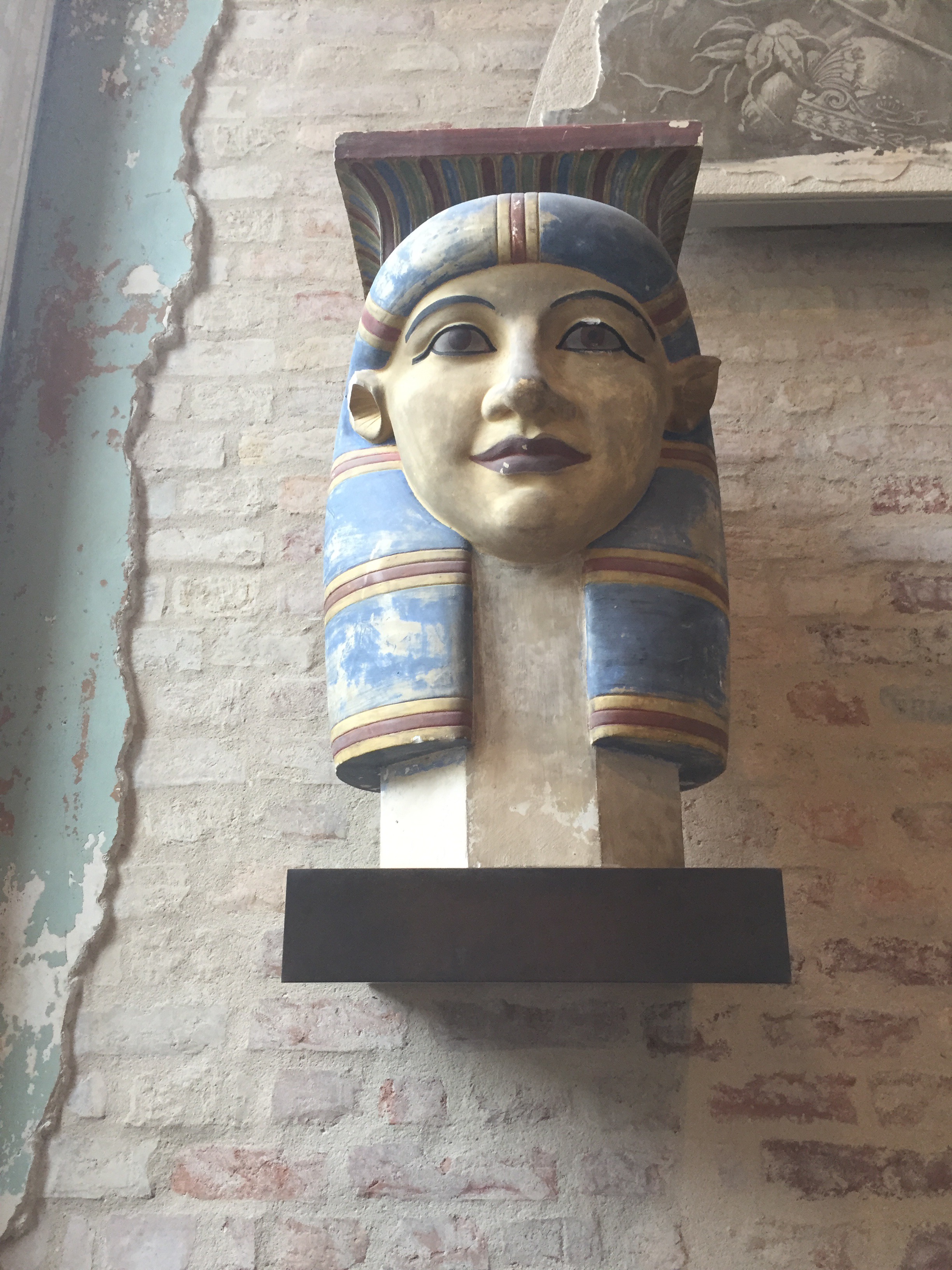
I find it hard to concentrate in museum spaces with over-laden trays of artifacts, so I focused on something more approachable, the palpable presence of historical and imaginative figures staring at me from calm repose.


A nameless Egyptian and a named Roman.  Vespasian is not one of the emperors who comes to mind when one thinks of “the glory that was Rome,” but he was on the imperial throne when the armies destroyed Jerusalem.  He founded the Flavian dynasty which lasted all of 27 years.  The Romans had trouble for a few hundred years keeping a good head of government. I tried understanding the history of the post Ceasar emperors and got lost in the names.

An imperial fanner, at the ready, to wave away flies from an Egyptian king.

A Roman homage to the Greek sun god, Helios.  I think I just discovered where Michaelangelo got some of the inspiration for his own sculpting.


The bust of Nefertiti.  Over 3000 years old, she presents a calm and serene gaze rivaling that of Mona Lisa.  The bust is at the center of the Neues and is one of the major objects in the German museums.  The bust gets its own small room, quiet and dark, under a dome.  It is, fortunately, more accessible than the Mona Lisa, without the hordes of gawkers extending selfie sticks over the crowd to commemorate their visits.  I have to apologize and report that this is not a museum photograph since photography is not permitted in the bust’s space.  So I took a picture of a post card to remind you of what is here.

Walking in the rain

Bode Museum, with collections of Byzantine art.
It turns out that fall in Berlin can be rainy, rainier so far than Ithaca.  A 2:00 p.m. flight from Syracuse to Detroit (like Columbus we needed to go west to find the east) got us first to Amsterdam and then Berlin at 8:00 a.m.  Twelve hours of travel takes a toll, especially since the early arrival left us without access to our room.  We stored our luggage and went out to do about all we could manage, wander the streets, shuffling a bit like extra’s from the walking dead.  

We chose a hotel on Oranienvburger Strasse since it was close to Museum Island and headed there to get bearings. Water, of course, attracts all wanderers and we quickly came to a bridge across the Spee on which the many tour boats kept sailing in spite of the weather.  There we also encountered the first museum, the Bode but decided that our fatigue made any museum tour impossible. 

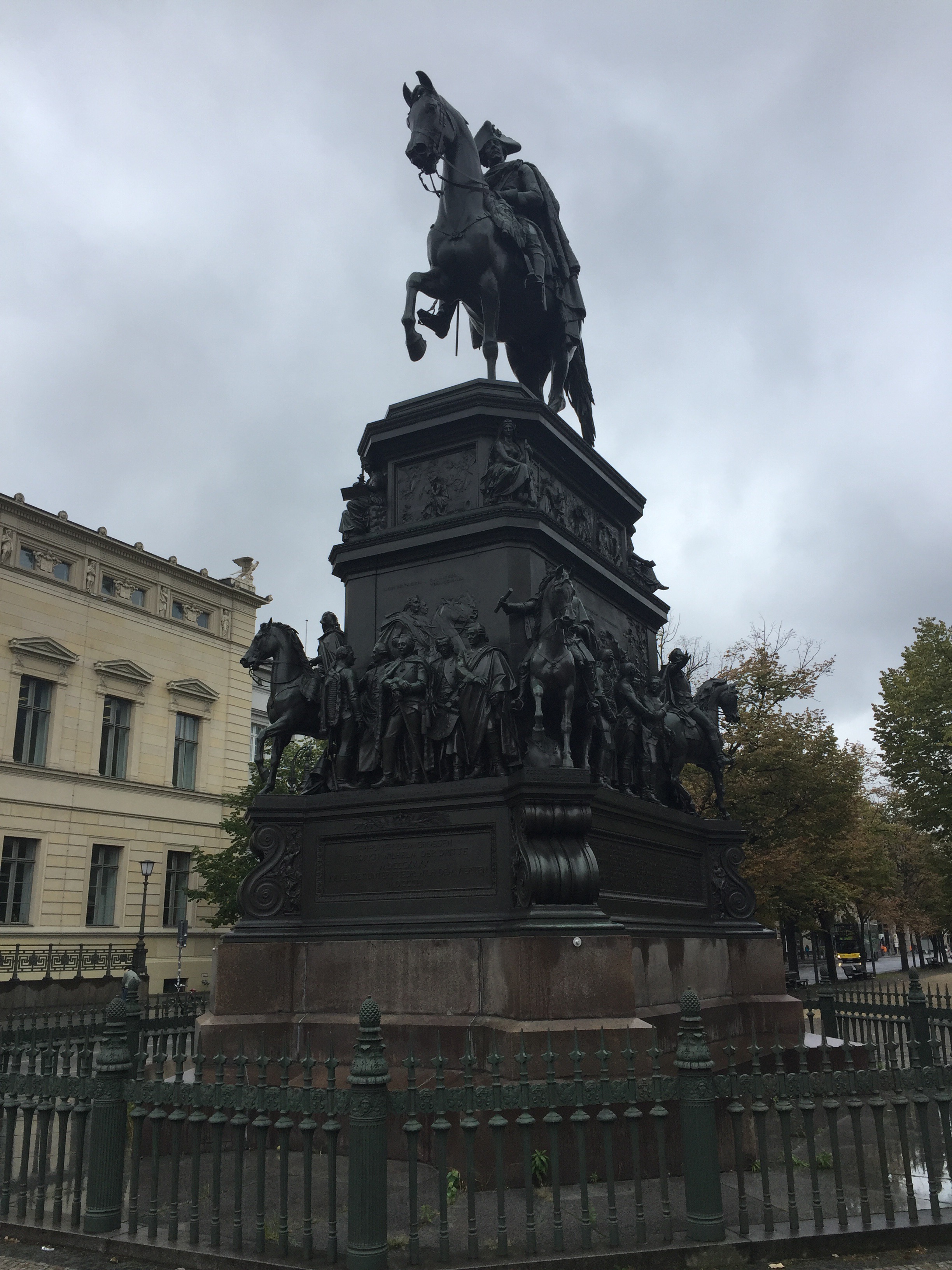
What we managed was a stroll along Unter den Linden.  With no churches or castles on offer, I thought a university edifice might serve as an imposing introduction to imperial architecture. The walking mall down the center of the boulevard begins with the statue of Frederick the Great and ends at Brandenburg Gate.  Like much of east Berlin, this area is under heavy construction and the mall was completely overwhelmed with a construction project.  

The next few days promise more clouds and rain, but rains in foreign climes seem, somehow, more attractive.